
An Aluminium PCB Doesn’t Automatically Solve a Heat Problem
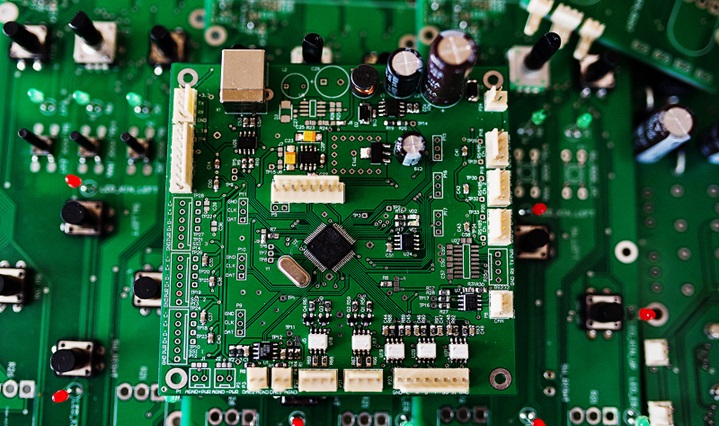
Switching to a metal base plate doesn’t automatically solve a thermal problem on its own. It’s a common assumption among engineers hitting overheating issues on a standard FR4 board: swap to metal, heat stops being a problem. What actually determines whether that swap helps is a narrower question than most people ask going in, namely whether the specific board’s thermal spec actually matches how much heat your components are producing in the first place.
What’s Actually Under That Metal Base Plate
An aluminium PCB circuit board is built on an aluminium alloy base, typically 5052 grade, with a thin dielectric layer, usually somewhere between 75 and 150 microns, sitting between the metal and the copper trace layer above it. That dielectric is doing more work than it looks like it’s doing: it’s the layer that actually determines how efficiently heat moves from your components down into the metal base that’s meant to carry it away.
Why That Conductivity Range Matters More Than It Looks
Thermal conductivity on these boards typically runs between 1.0 and 3.0 W/mK, and that range matters more than most spec sheets make it look like it does. A board at the lower end of that range, paired with a thicker dielectric for better electrical isolation, behaves meaningfully differently under sustained load than one at the upper end with a thinner dielectric. For something like a high-power LED array running continuously near its maximum rated output, that difference shows up as component lifespan, not just a number on a datasheet.
Questions Worth Asking Before You Switch From FR4
- How much heat is this component actually producing under real, sustained load, not just its theoretical maximum rating?
- Does the application call for better thermal transfer or better electrical isolation, since dielectric thickness tends to trade one against the other?
- What’s the realistic ambient operating temperature, given these boards are typically rated up to around 140°C?
Why the Design Partner Matters as Much as the Board Spec
This is exactly the kind of decision where it helps to work with PCB design companies in Singapore that will actually ask about your thermal load and operating environment before quoting a board, rather than just selling whichever aluminium spec happens to be in stock. A board that’s technically aluminium but mismatched to the application doesn’t fail outright, it just underperforms quietly until a component starts degrading faster than expected.
Where This Swap Tends to Earn Its Cost
LED lighting, motor drivers, power converters, and solar inverter components tend to be where this swap earns its cost most clearly, since these applications genuinely generate the kind of sustained heat that a standard FR4 board struggles to dissipate. A low-power sensor board running well within its thermal limits, by contrast, usually has nothing meaningful to gain from the switch, no matter how appealing the metal base plate sounds on paper.
What Else Comes With the Switch Besides Heat Handling
Beyond thermal performance, the copper layer on these boards is typically a standard 1oz thickness, with surface finish options including HASL, ENIG, or OSP depending on what the application and assembly process actually need. Board thickness usually runs at either 1.0mm or 1.6mm, and custom sizing is generally available for applications that don’t fit a standard footprint. None of these details change the thermal calculation, but they do affect how the board fits into the rest of an existing design.
What a Realistic Lead Time Looks Like
Shipping timelines on these boards tend to run in the range of a few days once specifications are confirmed, which is fast enough that thermal mismatches are rarely caught through trial and error before a batch has already been produced. That’s one more reason the upfront conversation about actual heat load matters more than it might seem: there’s little practical room to discover a mismatch after the fact and simply reorder without losing real time.
What RoHS and IPC Class 2 Actually Confirm
Boards built to IPC Class 2 and RoHS/CE compliance give a baseline assurance of build quality and material safety, but neither certification says anything about whether the specific thermal spec you’ve chosen suits your application. It’s a common mix-up: a board can be fully compliant and still be the wrong aluminium spec for the job, because compliance speaks to how well it’s made, not whether it was the right choice to make in the first place.
Not sure whether your board actually needs a metal core, or just better thermal design? Contact MPN Tech to talk through your specific load before you spec anything.