
Know Why Engineering Institutes Rely On Solar PV Emulators For True Simulation
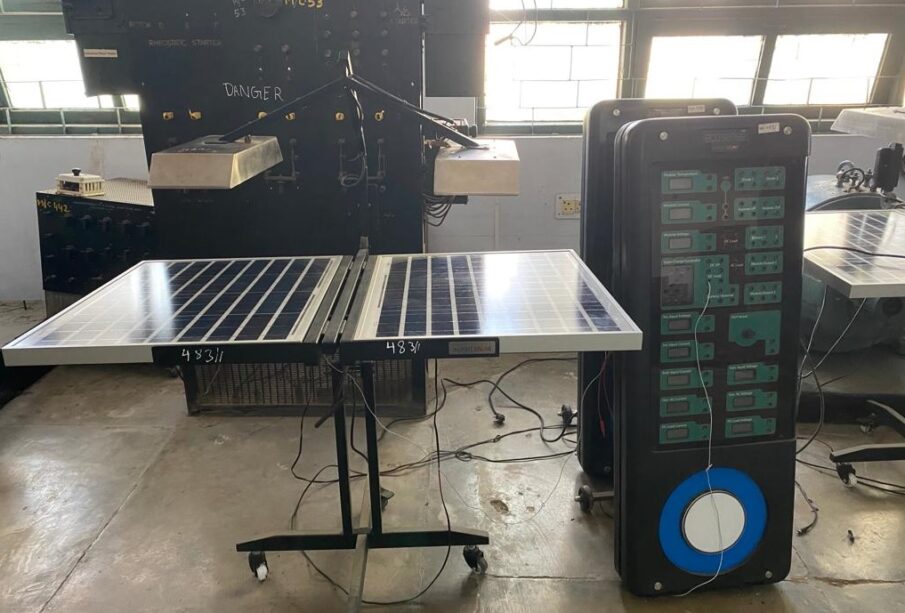
Teaching solar energy is far from simple; you can’t just install a panel on the roof and expect consistent results from the weather. Anyone experienced in engineering education knows how erratic real-world factors can be. Unexpected clouds, changing temperatures, and limited lab time often prevent students from fully understanding photovoltaic system behavior. This is why so many engineering institutes have adopted solar PV emulators as a reliable and practical teaching aid.
Learning Solar Power Beyond Textbooks
Concepts in solar energy seem clean and predictable in textbooks, but actual performance involves much more complexity. Students need to observe directly how voltage, current, and power shift with varying conditions. Relying only on outdoor panels results in unreliable demonstrations, since sunlight is uncontrollable. Modern engineering programs demand tools that support consistent repetition, clear results, and safe experimentation without environmental interference.
A solar PV emulator lets instructors faithfully reproduce real panel characteristics indoors. Students can then study responses to different light intensities or temperatures at any moment, completely independent of outside conditions.
What Makes Solar PV Emulators So Effective
At its core, a solar PV emulator acts as a sophisticated power supply that accurately mimics the current-voltage curves of actual photovoltaic modules. With easy adjustments, it can simulate dawn lighting, peak midday sun, partial shading, or even panel aging. This level of control helps students connect classroom theory to real observations, something that traditional outdoor setups often struggle to provide consistently.
Unlike real panels, emulators allow instant changes in setup. This saves considerable time and ensures every student encounters identical conditions, which is especially important in structured courses.
Safer, Smarter Hands-On Training
Safety is always a top concern in engineering labs. Real solar systems often involve high voltages and grid connections that can be hazardous for inexperienced students. Emulators provide a much safer environment, enabling free experimentation without risks to people or equipment.
They are particularly helpful when covering complex subjects like maximum power point tracking (MPPT) methods, inverter performance, and system efficiency calculations. Students gain real confidence by testing a wide range of scenarios, including simulated faults, in ways that outdoor systems seldom allow.
Supporting Research and Innovation
These devices prove valuable far beyond basic teaching. Graduate students and faculty members regularly use emulators to develop and test new control strategies, improve designs, and confirm experimental data. The repeatable nature of the conditions leads to more dependable and reproducible research outcomes.
Practical Benefits for Institutes
For educational institutions themselves, emulators offer clear advantages in space and budget management. Not many campuses have the area or resources for large-scale solar arrays. Compact, emulator-based laboratories deliver advanced renewable energy training with very low maintenance needs.
Conclusion
Solar PV emulators are becoming more and more popular in engineering institutes due to their ability to provide realism and complete and improved safety to learners of solar energy. These tools can help students to acquire a comprehensive knowledge on photovoltaic systems by making the learning process more interactive and reliable. In a profession where change is happening as fast as renewable energy, this form of practical training is vital in coming up with competent engineers who are ready to face the real world.